

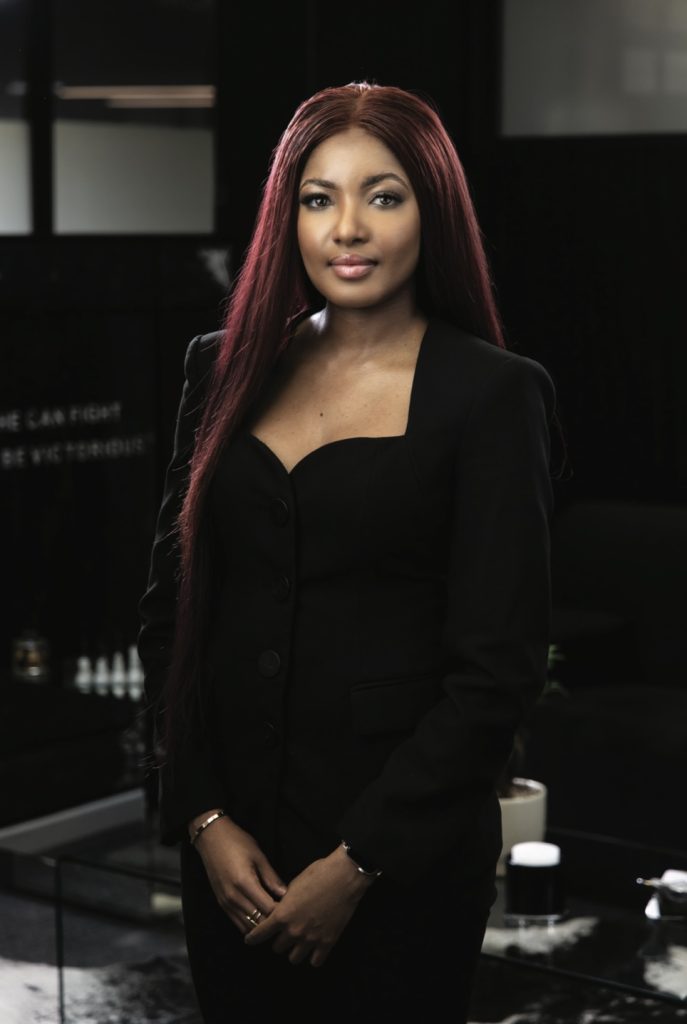
In the high-stakes world of South African public law, where the mechanisms of governance and the weight of accountability collide, insightful voices like Lihle Shabalala’s are essential. From navigating a multi-billion-rand tender dispute that exposed state capture to redefining what it means to be a Black woman in a demanding profession, her journey is one of quiet tenacity and sharp strategic foresight. In this interview, Lihle shares the personal experiences that shaped her career, the defining moments that forged her expertise, and her powerful message for the next generation of legal minds.
Lihle’s interest in law wasn’t sparked by a textbook or a courtroom drama, but by a deeply personal experience. Reflecting on her parents’ divorce and the ensuing custody process, she recalls, “I became curious as to the mechanics of the legal system and how it could influence the trajectory of people’s lives.” This childhood curiosity matured into a genuine interest in understanding law “as both a system of rules and a tool of influence,” ultimately laying the foundation for her career.
Below is our interview with this phenomenal woman in law!
FWIL:
What initially inspired you to pursue a career in law, and when did you realise that this was the path you wanted to follow?
SL:
In hindsight, my interest in law was shaped by a very personal experience: my parents’ divorce and the custody process that followed. At the time, I did not necessarily recognise it as inspiration, but I definitely became curious as to the mechanics of the legal system and how it could influence the trajectory of people’s lives. As I grew older, that curiosity evolved into a genuine interest in understanding how law operates as both a system of rules and a tool of influence, and that curiosity ultimately became the foundation of my career.
FWIL:
You specialise in administrative, public, and procurement law. What drew you to this particular area of law, and what excites you most about practising in this field?
LS:
Ironically, administrative and constitutional law were among my least favourite modules in university. However, two months into my articles, I was brought onto a R2.5 billion tender dispute, and I think it’s safe to say that matter singlehandedly shifted my trajectory. Since then, I have developed a deep appreciation for the field, and have even been jokingly referred to as the “tender dispute queen.” While this was never part of a grand plan, I am incredibly grateful for the path it has taken me on. This area of law has allowed me to engage with complex institutional and commercial dynamics, particularly in light of developments such as the Zondo Commission and other inquiries into systemic governance failures.
FWIL:
Administrative and procurement law often operate behind the scenes but have a major impact on governance and accountability. Why do you believe this area of law is so important in South Africa today?
LS:
South Africa finds itself at a critical juncture, particularly in light of the ongoing revelations of corruption and governance failures within state-owned entities and other public institutions. What we are witnessing in real time is the consequence of administrative and procurement frameworks not being properly upheld. At its core, public law exists to ensure that power is exercised lawfully, rationally and fairly, in line with our constitutional values. In a country facing significant socio-economic challenges such as poverty, unemployment and inequality, the proper management of public resources is not optional, it is essential.
FWIL:
What advice would you give to law graduates or young lawyers who are interested in specialising in public law, dispute resolution, or procurement law? Where should they begin?
LS:
I would recommend building a solid foundation in constitutional and administrative law. Early exposure to litigation is invaluable, as it sharpens both analytical and drafting skills. Beyond the academic foundation, my advice to young lawyers is to actively engage with real-world developments in the field. Follow key commissions and inquiries, such as the Madlanga Commission and the Ad Hoc Committee to Investigate Allegations made by Lt General Nhlanhla Mkhwanazi, and pay attention not only to the findings but to the legal principles that underpin them. While at an early stage one may not fully appreciate all the nuances, complexities or the various role players, what is important is that the foundational principles begin to take shape. Over time, those principles provide a framework through which more complex legal and institutional dynamics can be understood. Equally, I would advise that one be intentional about identifying practitioners in this space. Reach out and seek opportunities for vacation work or job shadowing and observe firsthand how these matters are navigated in practice.
FWIL:
Your work often involves complex matters across multiple forums, both litigious and non-litigious. What skills do lawyers need to effectively navigate such high-stakes and multifaceted matters?
LS:
Handling complex matters across multiple forums requires a combination of technical excellence, strategic foresight and adaptability. To be a successful lawyer, you must be able to distil large volumes of information into clear and actionable insights, while also anticipating risk and managing pressure. Equally important is the ability to communicate effectively. The ability to articulate a position clearly and persuasively is often what distinguishes a good lawyer from a great one.
FWIL:
Looking back on your career so far, what would you consider some of your most significant milestones or achievements?
LS:
There have been several milestones in my career, but one that I fondly always refer to is the successful judgment we, my team and I, were able to get in the R2.5 billion tender dispute I spoke of earlier. Beyond the commercial significance, the matter also contributed to exposing elements of corruption during the Gupta-era governance failures. Being part of a matter that had both legal and broader societal implications was indeed a defining experience for me.
FWIL:
As a Black woman in the legal profession, have you encountered challenges related to gender or race along your journey, and how have you navigated or overcome them?
LS:
As a Black woman in the legal profession, there have been many times where I have had to navigate both visible and subtle barriers, whether in the form of limited representation or preconceived expectations. With time and maturity however, I have learnt that one should not perceive this solely as a challenge to overcome but rather as a responsibility. A responsibility to demonstrate poise, excellence, confidence in my abilities and ensure that my work speaks for itself. I no longer rely on or wait for external validation, because in truth, it may not always come.

FWIL:
As a woman practising in a highly competitive legal environment, what changes would you still like to see to improve opportunities and representation for women in the legal profession?
LS:
It would be remiss not to acknowledge the incredible strides that have been made in advancing women into leadership roles, particularly within the legal profession. That said, there remains room for progress. The reality is that women often carry societal expectations and responsibilities that can influence the trajectory of their careers in ways that are not always visible or formally acknowledged. I would therefore like to see more intentional and structured initiatives that support women in reaching the highest levels of leadership without feeling compelled to compromise aspects of their identity or authenticity in the process.
FWIL:
Could you share a memorable moment or case in your career that significantly shaped your perspective as a lawyer?
LS:
One of the defining moments in my career ties back to the tender dispute I referenced earlier. It was a matter that required not only technical legal expertise but also strategic judgment under constant pressure. Experiences like that shape you as a lawyer as they build confidence and reinforce discipline and composure.
FWIL:
Outside of your professional work, what are some of your passions or interests, and why are they important to you?
LS:
Outside of my professional work, I like to think of myself as a global citizen. Travel has become an important part of my life. I have done a few solo travels which have taught me a lot about myself: how I respond to unfamiliar situations, how I adapt, and how to figure things out on the go. Travel also gives me the opportunity to pause, reflect on my life and move at my own pace, creating space to momentarily disconnect from the noise and demands of everyday life. I am a firm believer that we must be intentional about creating time for happiness, because life inevitably will create moments of difficulty on its own.
FWIL:
What guiding principles or philosophies do you live by, both professionally and personally?
LS:
Discipline! I firmly believe in the principle of “sticking to the plan, not your mood.” There will inevitably be days when motivation is low but consistency is what drives long-term success. I think excellence is something built in the quiet and in the everyday moments such as the decision to show up, to be prepared and to give your best, even when it is not convenient. Over time those small disciplined actions compound into meaningful growth and achievement.
FWIL:
What message would you like to share with young women who are just beginning their journey in the legal profession?
LS:
My message to young women entering the legal profession is that when the journey becomes difficult, as it inevitably will, remain resolute and grounded in your purpose. Not every stage will align neatly with your vision, but each step is part of a larger process. On the days when you feel overwhelmed, remind yourself that even the most challenging moments are temporary. Stay committed to your growth, trust your ability and do not allow yourself to be intimidated by demanding environments.
——–
Lihle Shabalala’s journey is a testament to the power of purpose, discipline, and quiet resolve. Her story reminds us that the most impactful careers are often forged in unexpected moments, and that true leadership lies not in seeking validation, but in carrying responsibility with excellence. For the young women who will follow in her footsteps, her message is clear: remain grounded in your purpose, trust your ability, and let your work speak for itself.